





Back to the Enlightenment roots
The original Enlightenment included a range of ideas centred on the pursuit of happiness, sovereignty of reason, and the evidence of the senses as the primary sources of knowledge and advanced ideals such as liberty, progress, toleration, fraternity, constitutional government, and separation of church and state.
We believe those values never faded away and are, in fact, as foundational today as they were three hundred years ago.

“It is certain, in any case, that ignorance, allied with power, is the most ferocious
enemy justice can have.”
James Baldwin
1924-1976

“Ignoring isn’t the same as ignorance, you have to work at it.”
Margaret Atwood
1939 –
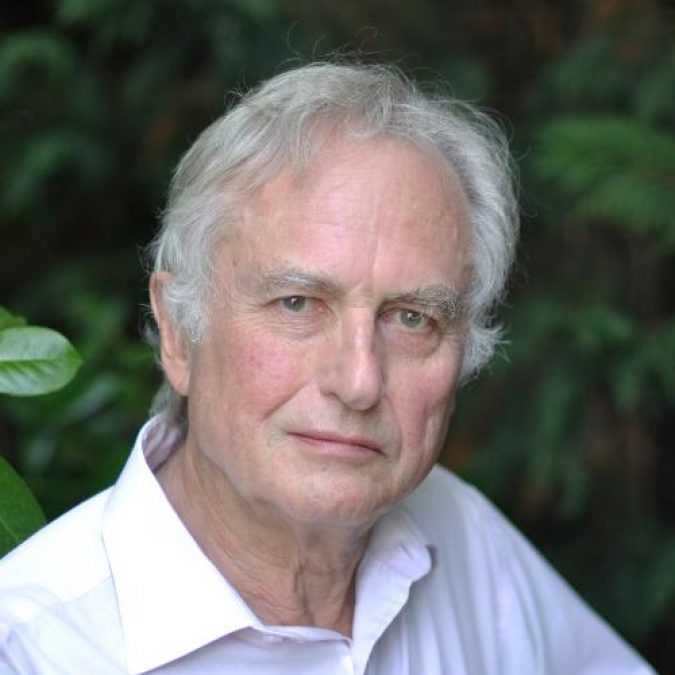
“The meme for blind faith secures its own perpetuation by the simple unconscious expedient of discouraging rational inquiry”
Richard Dawkins
1941 –

“Equality is not the empirical claim that all groups of humans are interchangeable; it is the moral principle that individuals should not be judged or constrained by the average properties of their group”
Steven Pinker
1954 –

“Where all are guilty, no one is; confessions of collective guilt are the best possible safeguard against the discovery of culprits, and the very magnitude of the crime the best excuse for doing nothing”
Hannah Arendt
1906-1975
Welcome to civilized debate
A group of Canadian humanists have created a space where people can freely discuss subjects of concern in civilized debate. The New Enlightenment Project website contains information on enlightenment principles and invites forum discussion about their application and modification.
While the sovereignty of empiricism and reason along with advanced ideals such as liberty, progress, toleration, and fraternity have universal application, what deserves to remain universal and what is best left to particular cultures is the raging debate of our time. This forum allows such discussion.
Have a question?







Latest
- Humanism and EconomicsHUMANISM AND ECONOMICS PART ONE You do not have to be a doctor to know that good hygiene, nutrition, and exercise are… Read more: Humanism and Economics
- My first impressions of the New Enlightenment project
 In an age when noise is mistaken for argument and outrage for conviction, the New Enlightenment Project stands apart – a… Read more: My first impressions of the New Enlightenment project
 - Humanism as Resistance: Reclaiming Dialogue in Divided TimesPreviously published in: humanistfreedoms The rise of modern individualism, scientific inquiry, and pluralistic thought did not emerge in Europe because Christianity was… Read more: Humanism as Resistance: Reclaiming Dialogue in Divided Times
- Two Solitudes of Secularism
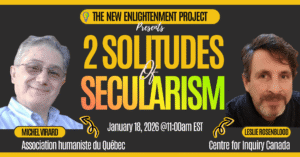 Two distinct interpretations of secularism are discussed by Leslie Rosenblood, Secularism Chair of the Centre for Inquiry Canada, and Michel Virard, President… Read more: Two Solitudes of Secularism
 - Humanism and Religion
 PART ONE I Humanism seeks truth from evidence and rational analysis. It engages in calm and open discussions that display a desire… Read more: Humanism and Religion
 - Humanism, Democracy, and Freedom
 PART ONE Democracy in government essentially means “rule by the people” rather than rule by a monarch, aristocracy or dictator. Democracy is… Read more: Humanism, Democracy, and Freedom